%201.webp)
Deliver smarter discounts by responding to visitor intent

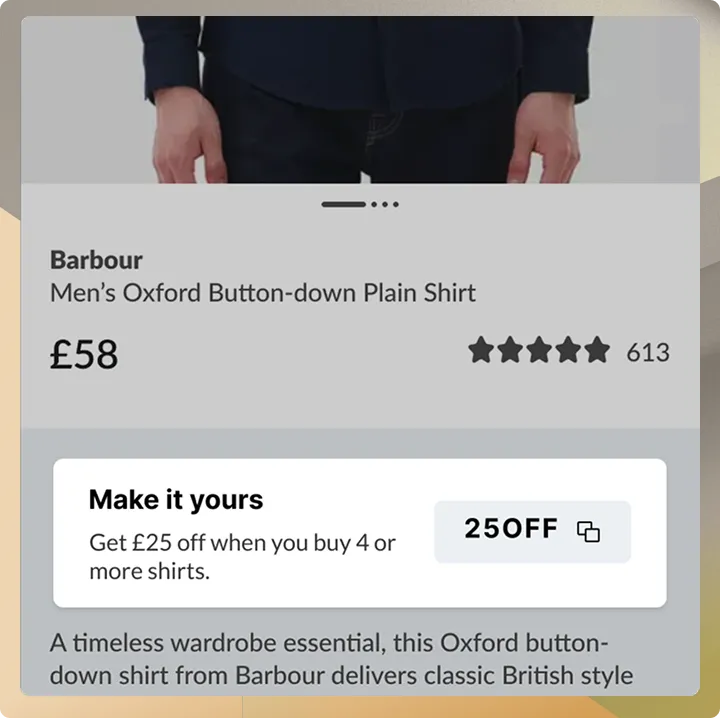
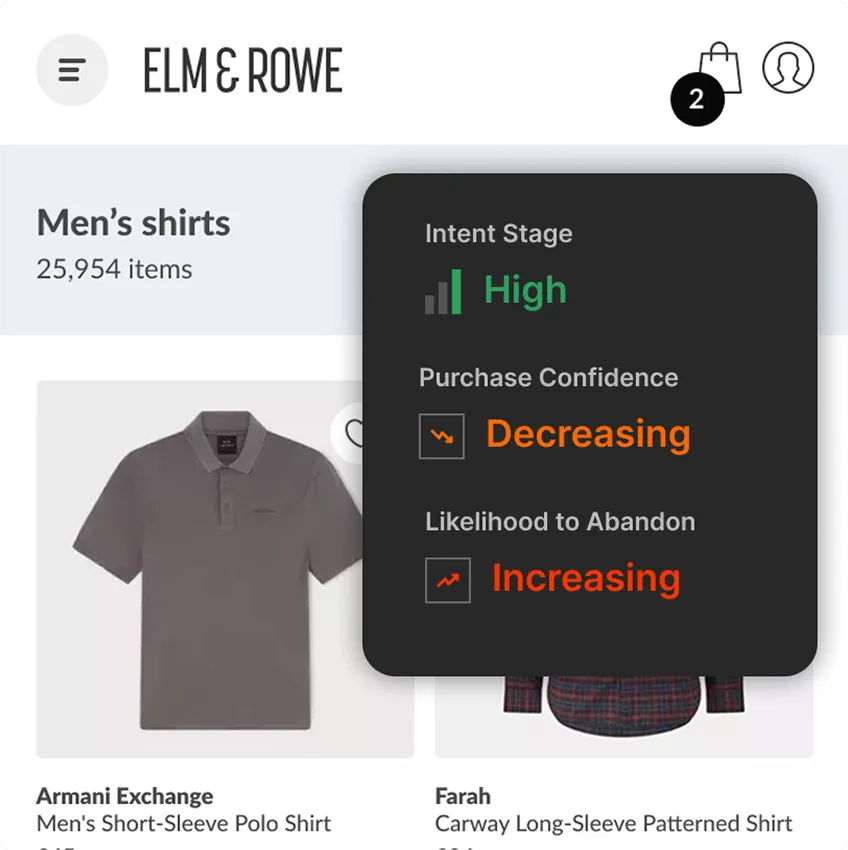
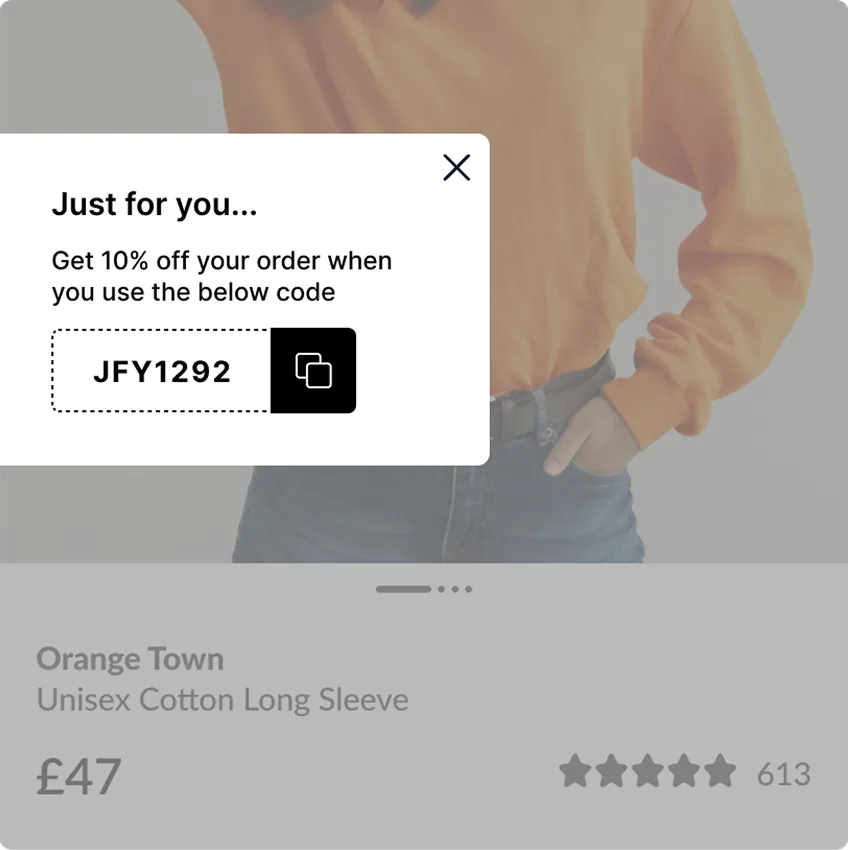
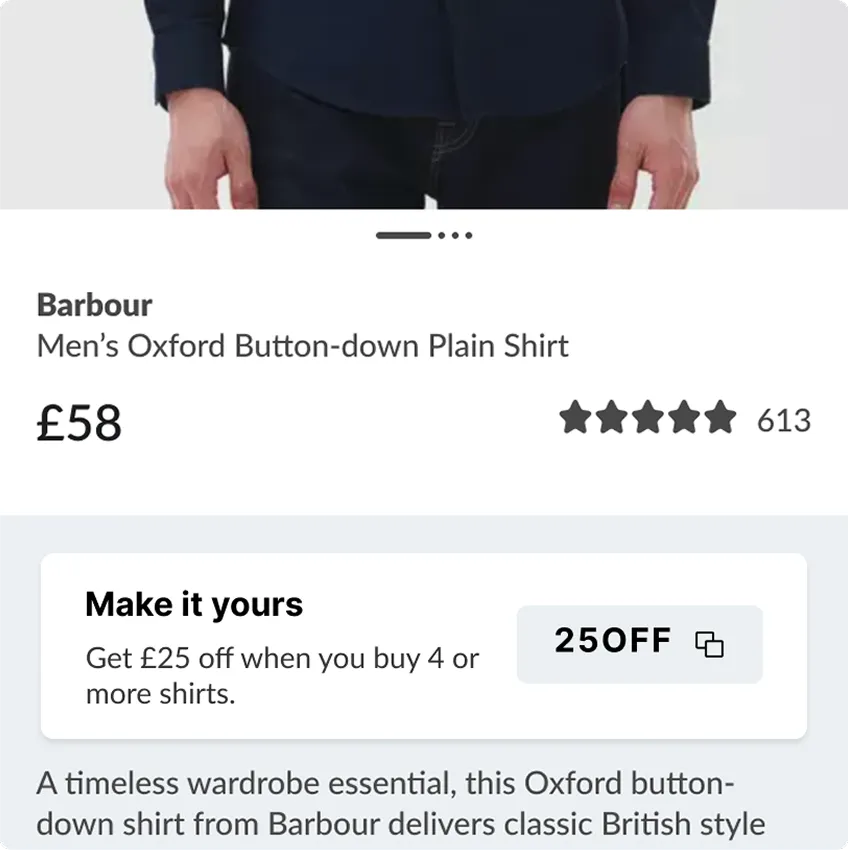
Our real-time optimisation agent
mirrors in-store timing and relevance


%201.webp)
Agentic Campaigns


Customer Spotlight



Works with (or without) 
the tools you already use


Launch intent-based 
discounting in minutes
Join the 100+ eCommerce brands using èßäÊÓƵ


Frequently asked questions
What is on-site discounting in eCommerce?
On-site discounting refers to incentives shown directly to visitors during their shopping session, such as discount overlays, banners, or in-page prompts. Unlike promotional codes shared via email or paid campaigns, on-site discounts respond to what a visitor is doing right now. Such as browsing a product, hesitating at the basket, or showing signs they are about to leave your site. When used well, they can help encourage people who are considering buying, to actually purchase. When used poorly, they train shoppers to expect money off every time they visit.
Does showing discount popups to every visitor damage brand perception?
It could. When every visitor sees the same discount regardless of their behaviour, you are telling your most engaged buyers that the price they were happy to pay wasn't the real price. For those customers, the discount adds nothing and chips away at perceived value. The brands that protect margin without sacrificing conversion are the ones that reserve discounts for visitors who genuinely need one: those who are hesitating, comparing, or showing clear signs of abandoning a session.
When is the right time to show a discount offer during a shopping session?
Timing depends on what the visitor is actually doing, not how long they've been on the page. A shopper who lands on a product and immediately gets a discount prompt hasn't had the chance to decide whether they want the item at full price. Someone who has spent time comparing, added items to their basket, and started to hesitate is a different situation entirely. The right moment is when hesitation becomes visible in your customer's behaviour not when an arbitrary time or page-count rule fires.
How do you prevent shoppers from expecting a discount every time they visit?
The quickest way to train customers to expect discounts is to show them to everyone, every time. Once shoppers know a discount is coming, many will wait for it. Some actively search forums and other places for discount codes. Avoiding discounting means being selective. Only show discounts based on signals that suggest a visitor genuinely needs one, rather than as a default for all traffic. It also means varying the type of incentive used, so that a deal never becomes a predictable part of the browsing experience on your site.
What makes an effective discount overlay, and what drives visitors away?
An effective discount overlay appears at a moment when the visitor is genuinely undecided, offers an incentive that fits the context of their visit, and does not interrupt a shopper who was already moving towards purchase. What drives visitors away is the opposite: an overlay that fires within seconds of landing on a page, a discount that feels larger than expected and raises questions about the original price, or a prompt that keeps reappearing after it has been dismissed.
How can you tell which visitors actually need a discount to convert?
Many retailers can't tell, which is why they default to showing discounts to everyone. A visitor who needs a discount tends to hesitate. They dwell on a product without adding it to the basket, return to the same item across multiple sessions, or spend time on a page without doing anything. These signals, combined with how early or late they are in their session, give a better idea of whether a discount is likely to make a difference or simply reduce margin on a sale that would've happened without one.