%201.webp)
Social Proof with èßäÊÓƵ
Deliver social proof at the right time by responding to intent
Drive up to 20% more impact by only showing social proof when it adds confidence. Help the right visitors to convert, without distracting others.

20% uplift from confidence-building proof
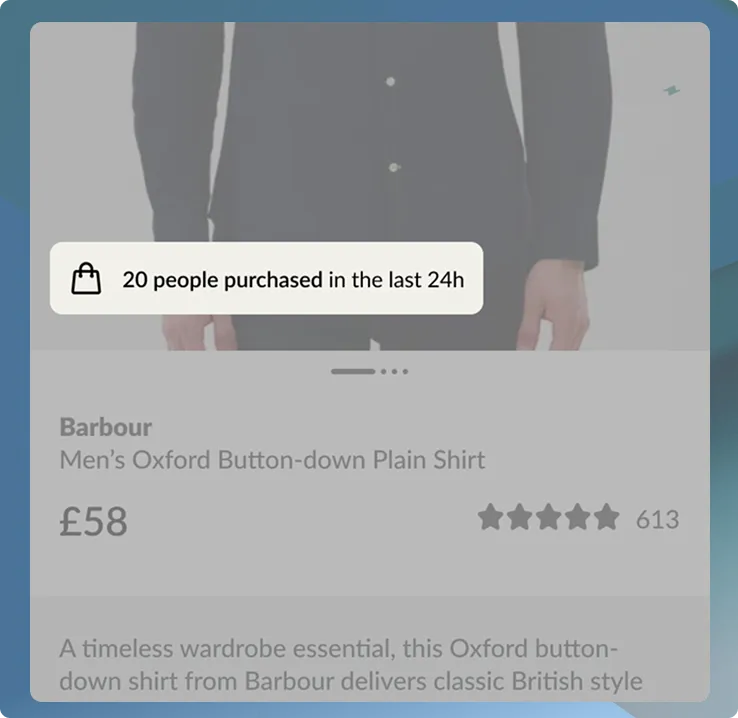
How Made With èßäÊÓƵ helps you
Our real-time optimisation agent
mirrors in-store timing and relevance
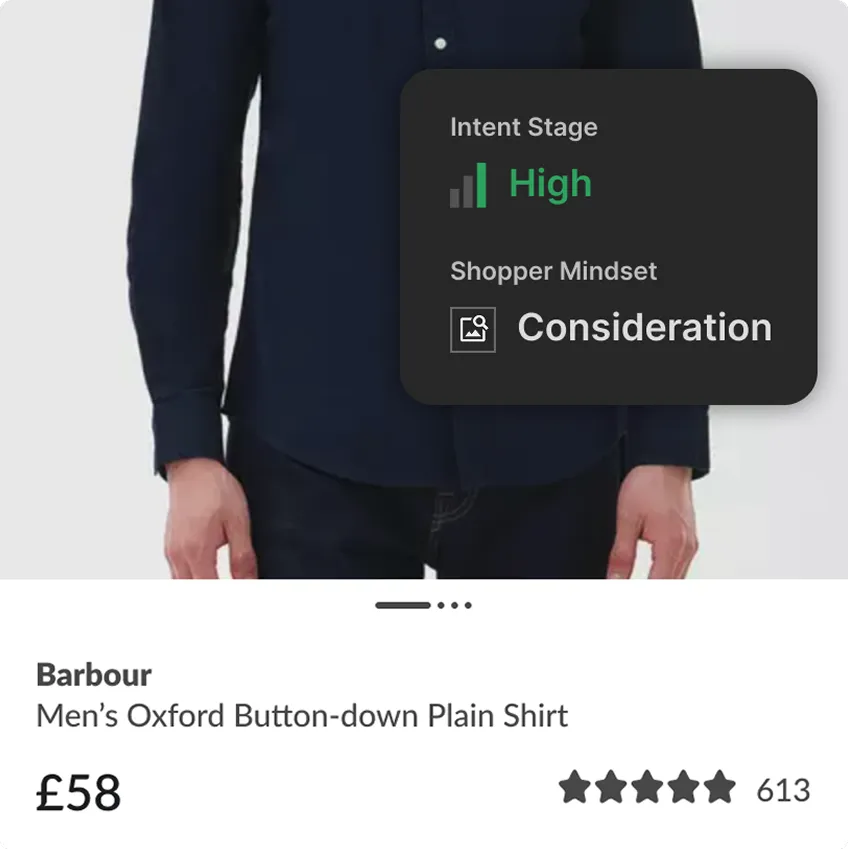
Only show social proof when helpful
Show reassurance when a shopper is likely to value it, instead of placing the same proof across every page by default.
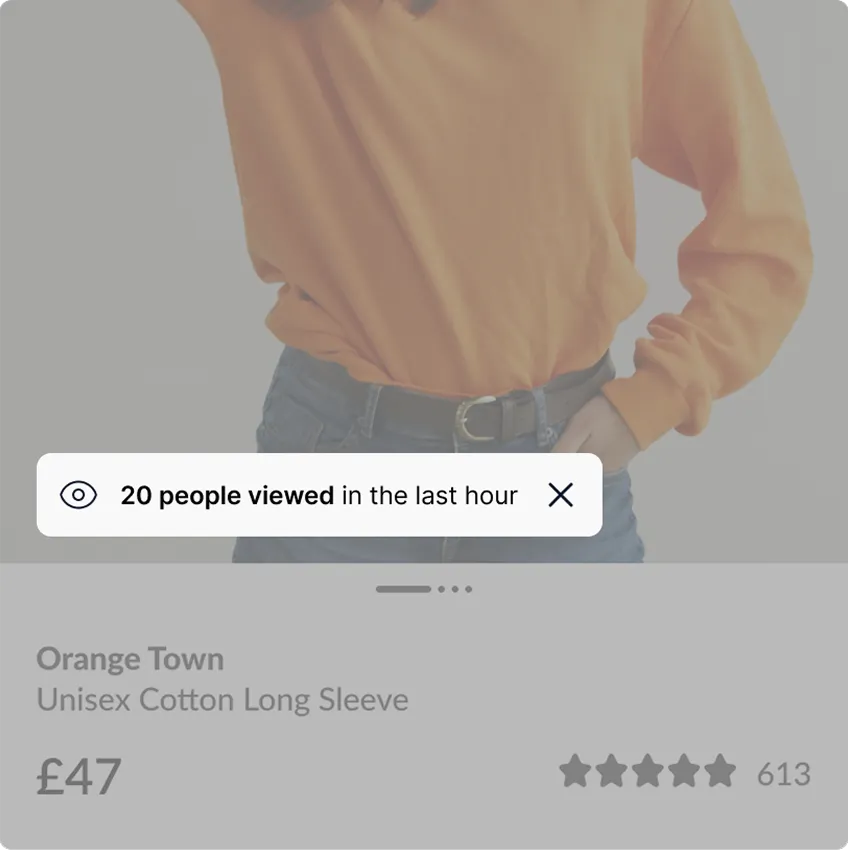
Reinforce, don’t distract
The Optimisation Agent surfaces relevant social proof; views, add to carts, purchases and more, exactly when it reinforces a decision.
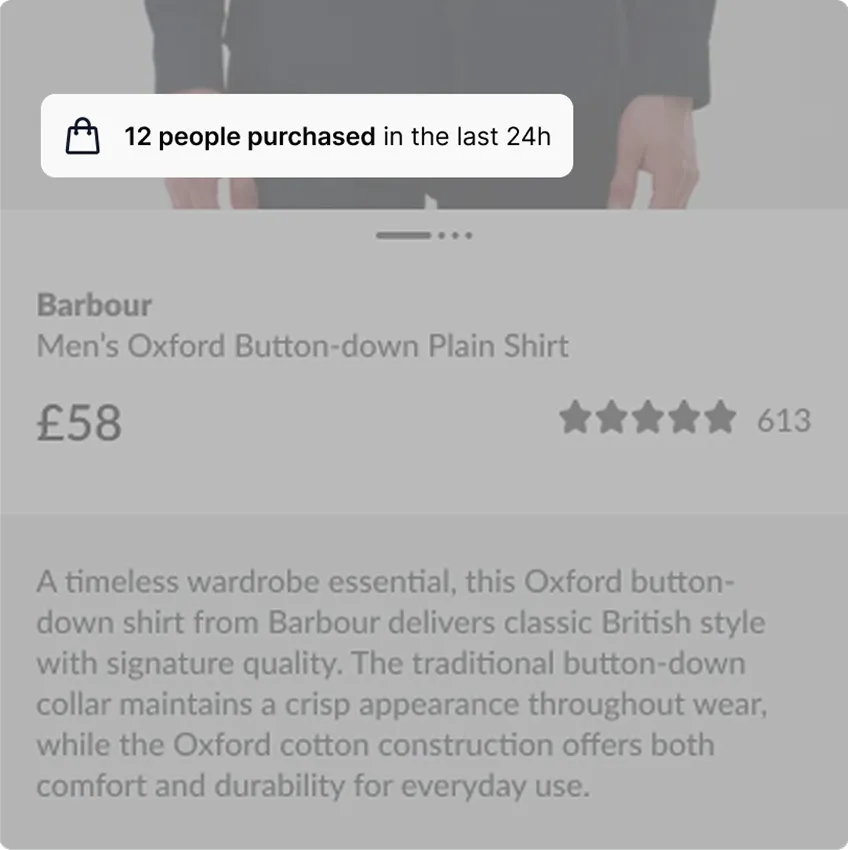
Choose the right timing
Display data from the last 15 mins, hour, day, or longer, to match the level of urgency or reassurance needed.
Surface at the right moment


%201.webp)
Getting Started
Set up experiences in minutes with
Agentic Campaigns
Agentic Campaigns
01
Define the experience
Choose a ready-made overlay or in-page template, customise it to your brand, and tell the Agent what to optimise for - conversion, AOV, revenue, or even a custom goal.
02
See results in days, not weeks
Your Optimisation Agent gets to work immediately, testing across multiple intent segments at once so you reach value faster. No manual testing or guesswork required.
03
Let it run
The Agent automatically shifts traffic toward what’s performing best as results emerge, improving performance over time with no ongoing monitoring or updates needed.
Rapid setup. Faster results.

Choose from 20+ templates

Run overlays and in-page experiences

Launch in under 5 minutes
Choose from 20+ templates
Run overlays and in-page experiences
Launch in under 5 minutes
Choose from 20+ templates
Run overlays and in-page experiences
Launch in under 5 minutes
Customer Spotlight


How Hunter &Â Gather increased conversions by targeting social proof to the right visitors (instead of just hitting everyone)

Without èßäÊÓƵ, Hunter & Gather showed "people loved this product" social proof generically to all visitors.

By measuring performance across èßäÊÓƵ Stages, they found it reduced conversion for low intent visitors.

With èßäÊÓƵ, they only show social proof to high-intent visitors avoiding negative impact and lost revenue.
“èßäÊÓƵ gives us the context to act more appropriately. This gives us more opportunities to target, but also means we can send less, and get more.â€�

Jackie Barnett
Head of Customer, MandM
Integrations
Works with (or without) 
the tools you already use


Launch intent-based 
social proof in minutes
See how Made With èßäÊÓƵ can help you unlock the growth you’ve been missing.
Get a DemoGet a Demo
Join the 100+ eCommerce brands using èßäÊÓƵ


Social proof FAQs
What is social proof in eCommerce?

Social proof experiences are all about providing evidence that other people have bought, reviewed, or engaged with a product and that their experience was positive.
In eCommerce, common forms include star ratings, review counts, “X people bought this today� indicators, and user-generated content. The principle is simple. When shoppers are uncertain, they look to the behaviour of others to validate their own purchasing decisions.
In eCommerce, common forms include star ratings, review counts, “X people bought this today� indicators, and user-generated content. The principle is simple. When shoppers are uncertain, they look to the behaviour of others to validate their own purchasing decisions.
What types of social proof work best on product pages?
Reviews and star ratings remain the most trusted form of social proof, particularly when there's lots of them. Purchase velocity indicators (“23 people bought this in the last 24 hours�) can create urgency for high-consideration products. Low stock warnings are effective should be genuine, shoppers are increasingly sensitive to manufactured scarcity.
The most effective social proof is specific, credible, and timed to moments when people genuinely hesitate and need some reassurance.
The most effective social proof is specific, credible, and timed to moments when people genuinely hesitate and need some reassurance.
Does social proof always increase conversions?
No. Social proof is most effective for shoppers who are already considering a purchase and need reassurance to commit. For shoppers who are still in discovery mode, or who aren’t ready to buy, prominent social proof can feel like pressure rather than confidence, and reduce engagement. Showing the same social proof to all visitors regardless of intent can therefore drag overall conversion down, not up.
Can showing social proof actually hurt conversion rates?
Yes. When social proof is shown to low-intent visitors who are still browsing rather than evaluating, it can increase anxiety rather than confidence. Hunter & Gather found this when they used intent for their social proof.
Without èßäÊÓƵ, social proof was shown to every visitor on the product page. The overall result looked flat, with no clear signal on whether it was working. With èßäÊÓƵ, the picture was completely different. The same message, measured by segment, showed a clear split on conversion: -6% for low intent visitors, +14% for high intent visitors. So, they adjusted their delivery accordingly to get all of the positive impact, with none of the negative.
Without èßäÊÓƵ, social proof was shown to every visitor on the product page. The overall result looked flat, with no clear signal on whether it was working. With èßäÊÓƵ, the picture was completely different. The same message, measured by segment, showed a clear split on conversion: -6% for low intent visitors, +14% for high intent visitors. So, they adjusted their delivery accordingly to get all of the positive impact, with none of the negative.
How do you know which visitors to show social proof to?
Made With èßäÊÓƵ analyses real-time behavioural signals. We track scroll depth, product interaction, return visit patterns, time on page, to identify visitors who are genuinely evaluating a purchase.
When you use Made With èßäÊÓƵ to deliver social proof, it is only shown in line with your strategies and what our agent learns to positively impact your goals. This avoids applying pressure to shoppers who aren’t ready for it, while giving a confidence boost or nudge to those who can benefit from it.
When you use Made With èßäÊÓƵ to deliver social proof, it is only shown in line with your strategies and what our agent learns to positively impact your goals. This avoids applying pressure to shoppers who aren’t ready for it, while giving a confidence boost or nudge to those who can benefit from it.
How is this different from just adding review widgets to product pages?
Review widgets show the same content to every visitor, regardless of where they are in their buying journey. èßäÊÓƵ-based social proof is selective, it’s shown at the right moment, to the right visitors, based on their live behavioural signals and what our agent learns works best. The result is that social proof does its job (building purchase confidence) without creating fuss or friction for shoppers who won't benefit from it.